Why Is Solid Wood Furniture So Expensive in China?

Time:2026-10-12 Author:Henry
0%

When shoppers compare oak tables, walnut beds, or elm cabinets in China, one question often appears: why is solid wood furniture so expensive? The answer is rarely just the timber itself. A solid wood dining table may begin with logs that grew for decades, then pass through careful cutting, kiln drying, grading, and repeated moisture checks. Every stage adds cost. It also reduces the risk of warping, splitting, or visible defects.

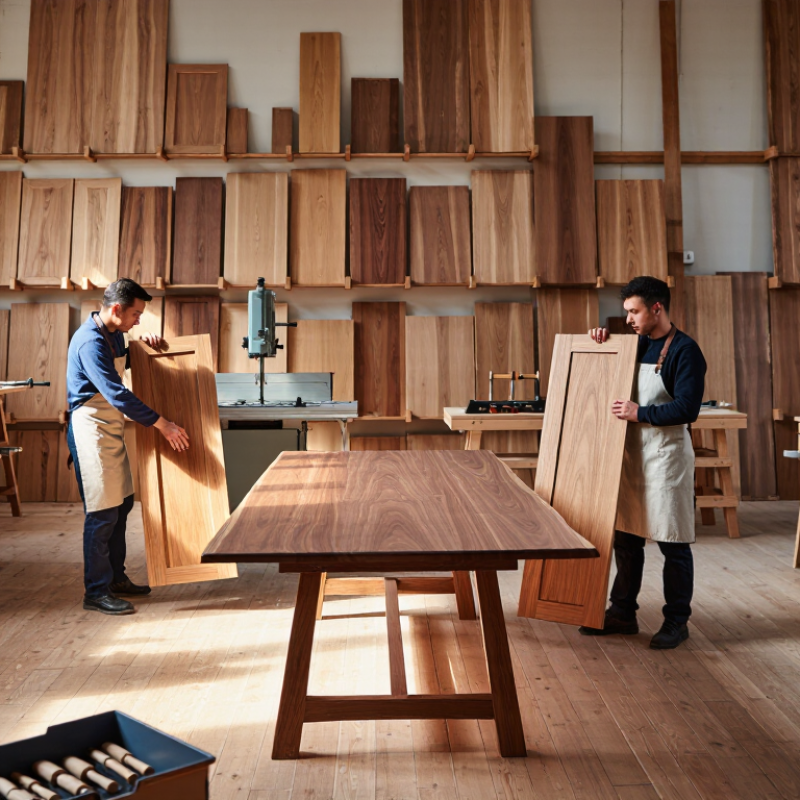
In my experience researching furniture markets, the most reliable workshops explain their materials clearly. They identify the wood species, its origin, moisture content, and finishing process. Skilled workers still inspect boards by hand. They match grain patterns across cabinet doors. This takes time. It is not factory magic. Imported hardwoods can also carry shipping, storage, inspection, and currency costs. Domestic species may be cheaper, but premium grades remain limited. Labor is another factor, especially when joinery, carving, sanding, and hand-applied finishes are involved.

Still, a high price does not automatically prove high quality. That deserves careful thought. Some products use attractive veneers, mixed wood, or unclear labels while appearing fully solid. Buyers should inspect joints, drawer construction, surface consistency, and written material descriptions. A heavy table is not necessarily a durable table. Responsible sellers provide practical evidence instead of vague luxury claims. Therefore, the real cost reflects materials, craftsmanship, time, business overhead, and quality control. Yet buyers must remain critical. Expensive furniture can be excellent, average, or poorly explained. Understanding those differences makes the purchasing decision more confident and realistic.
Why Is Solid Wood Furniture So Expensive in China?

What Defines Solid Wood Furniture in China?

Why Is Solid Wood Furniture So Expensive in China?

In China, “solid wood furniture” does not always mean every part is made from solid timber. A cabinet may use solid wood for its frame, doors, and legs, while its back panel uses plywood or fiberboard. This can still be described as solid wood furniture, depending on the product specification. Terms such as “全实木” usually suggest a higher level of solid timber use, but buyers should check the written details. The definition is less simple than many advertisements imply.

Real solid wood costs more because trees require years to mature, then the timber must be dried carefully. Poor drying can cause cracks, warping, or loose joints after delivery. Skilled workers also select boards by grain, color, and moisture content. Offcuts create waste. A dining table with visible end grain and hand-fitted joints may contain far more labor than its clean shape suggests. Price alone proves nothing.

Tips: Ask which parts are solid wood. Check the back, drawer bottoms, and cabinet interiors. Look for matching grain across joined boards. A strong chemical smell is not proof of quality, and its absence proves little. Request moisture information and a detailed material list. If a seller avoids clear answers, pause. Even experienced buyers can misunderstand labels, especially when veneers resemble natural wood.

How Material Selection Raises Furniture Costs

Solid wood furniture is expensive in China because material choice begins long before assembly. Species, grade, moisture content, and usable yield all shape the final invoice. The FAO’s Global Forest Resources Assessment 2020 reports that planted forests cover 294 million hectares, only 7% of global forest area. That figure does not mean wood is rare everywhere. It shows why consistent, high-grade supply needs careful planning.

In China, kiln-dried boards command more than freshly sawn timber. Drying can take weeks, and poor control causes warping, cracks, or hidden internal stress. The USDA Foreign Agricultural Service’s China: Wood Products Annual 2023 reported that China imported about 63.7 million cubic meters of logs in 2022. Import dependence adds freight, exchange-rate, inspection, and inventory risks. Wide boards cost more. Skilled cutting can also waste valuable volume around knots and defects.

Material labels can mislead buyers. A table described as “solid wood” may combine premium visible boards with lower-grade internal parts. Buyers should ask about species, moisture readings, joinery, and the percentage of solid components. These checks take time, but they reveal whether the price reflects wood or presentation. Not every expensive table is better. From workshop experience, I treat a high price as a question, not proof.

Why Is Solid Wood Furniture So Expensive in China? - How Material Selection Raises Furniture Costs

Indicative cost structure for solid-wood furniture manufacturing in China. The figures show how timber species, quality, moisture control, and material efficiency influence the final price.

Cost Dimension Typical Material or Process Indicative Data Why the Cost Increases Effect on Furniture Pricing
Timber Species Domestic or imported kiln-dried hardwood Approximately RMB 3,500–25,000 per m³ Species with higher density, better appearance, stable supply, or longer growth cycles generally command higher prices. Material selection alone can create a several-fold difference in the raw wood cost of the same table or cabinet.
Common Wood Price Bands Pine, rubberwood, ash, oak, and walnut RMB 2,500–4,500; 3,500–6,000; 6,000–10,000; 7,000–14,000; 12,000–25,000 per m³ respectively Prices vary by origin, grade, board size, moisture content, certification, exchange rates, and import logistics. Choosing walnut instead of pine, for example, can substantially increase the material portion of a product before labor and finishing are added.
Usable Material Yield Conversion from rough lumber to finished components Often about 45%–65% Knots, cracks, wane, warping, color variation, end splits, and machining allowances reduce the volume that can become saleable parts. A product requiring 1 m³ of finished components may consume roughly 1.5–2.2 m³ of purchased lumber.
Board Grade and Defect Selection Clear or selected boards versus rustic or character-grade boards Clear-grade boards may cost 20%–80% more than lower visual grades Clear surfaces require fewer knots, fewer repairs, more consistent color, and stricter sorting before production. Premium visual requirements increase both the purchase price and the amount of rejected or downgraded material.
Moisture Control Kiln drying and acclimatization before assembly Furniture lumber is commonly targeted at about 8%–12% moisture content for indoor use Controlled drying requires energy, storage space, testing, and time. Poorly dried timber can shrink, swell, crack, or distort after delivery. Stable moisture content raises production cost but reduces warranty claims, returns, and dimensional failures.
Component Size Wide boards, long rails, thick tops, and large uninterrupted panels Wide clear boards generally carry a premium over narrow standard boards Large defect-free pieces are less common. Manufacturers may need to sort more lumber or use finger-jointed and edge-glued construction. Large dining tops, bed rails, and cabinet sides can cost more even when the total finished volume is similar.
Panel Construction One-piece solid panel, edge-glued panel, or engineered wood core with solid-wood veneer Solid panels typically require more material and sorting than engineered cores Solid panels use more selected timber and require careful grain direction, jointing, clamping, and seasonal movement control. Fully solid construction usually costs more than veneer or engineered alternatives but provides a different tactile and repairable product profile.
Machining Difficulty Dense hardwoods and complex joinery Dense species can require slower cutting and more frequent tool maintenance Hard, interlocked, or irregular grain can increase cutting resistance, sanding time, tool wear, and the risk of tear-out. Higher processing hours and consumable costs are incorporated into the labor and manufacturing margin.
Surface Finishing Open-pore oil, wax, water-based coating, or multi-step lacquer finish Premium finishes may require 3–8 process stages More sanding, color matching, drying, inspection, and rework are needed for natural timber surfaces with visible grain variation. Finishing can add a substantial labor cost, especially when a uniform color is required across naturally varied boards.
Material Traceability Documented legal origin, testing, and responsible-sourcing records Documentation and testing costs vary by market and order requirements Traceability requires supplier records, inspections, paperwork, and sometimes third-party testing or chain-of-custody controls. Verified sourcing increases administrative cost but improves regulatory compliance and buyer confidence.
Logistics and Storage Imported lumber, inland transport, and conditioned warehouse storage Import-related costs can include freight, duties, port handling, and inventory financing Wood is bulky, heavy, and sensitive to humidity. Long storage periods tie up capital and require controlled handling. Logistics costs are distributed across the finished product and are more noticeable for heavy solid-wood furniture.
Expected Service Life Repairable solid components and refinishing potential Long-term value depends on species, construction, finish, and indoor conditions Higher-cost furniture may use thicker components, stronger joints, replaceable hardware, and materials suitable for future refinishing. The initial purchase price can be higher, while the cost per year of use may be lower when the product remains serviceable for a long period.
Data note: All price figures are indicative mainland-China kiln-dried lumber ranges for comparison rather than supplier quotations. Actual prices change with species origin, board grade, thickness, moisture content, order volume, exchange rates, import conditions, and delivery location. Percentages and process ranges represent common manufacturing estimates and should be validated for a specific product specification.

Why Skilled Craftsmanship and Labor Matter

Why Is Solid Wood Furniture So Expensive in China?

Why Skilled Craftsmanship and Labor Matter

Solid wood furniture is not priced like a flat-pack product. Each board needs inspection, drying, cutting, joining, sanding, and finishing. Skilled workers may spend hours correcting small changes in grain or moisture. These decisions are difficult to automate.

China’s National Bureau of Statistics reported an average annual wage of RMB 120,698 for urban non-private employees in 2023. This figure is not a furniture-specific wage, but it shows the broader labor benchmark. The China Furniture Association’s 2023 industry report also describes continuing pressure from labor, materials, and quality-control costs. A skilled cabinetmaker’s time is therefore part of the product, not an invisible expense.

The details are physical. A craftsman may test a drawer repeatedly until it closes without resistance. He may reject a panel after finding internal cracks. The workshop becomes quieter here. Mistakes still happen. A hand-finished surface can show slight variation, and that is not always a defect. However, careless work is different from honest variation.

The International Labour Organization has repeatedly linked better skills with higher productivity and job quality. In furniture production, training affects yield, safety, repair rates, and service life. Cheaper labor can reduce the invoice today, yet create loose joints or uneven finishes later. That does not mean every expensive piece is excellent. Buyers should still ask about timber moisture, joinery, finishing methods, and quality inspection records.

How Supply Chains, Regulations, and Logistics Affect Prices

Solid wood furniture costs more in China because its price begins long before the workshop.

China relies on both domestic timber and imported logs, especially for species with stable grain, low moisture, and reliable strength. The FAO Global Forest Resources Assessment 2020 recorded about 4.06 billion cubic meters of global roundwood production annually during 2017–2019. Yet usable furniture-grade timber is only a small portion. Knots, cracks, drying loss, and grading defects reduce the final yield.

Regulation adds another layer. Legal harvesting documents, quarantine checks, customs declarations, and traceability records take time and labor. CITES controls can also apply to certain protected species. These procedures do not automatically create high costs, but they reduce flexibility when a shipment is delayed or rejected. The EU Deforestation Regulation may further increase due-diligence work for suppliers serving European markets. Paperwork matters.

Logistics can be surprisingly expensive.

UNCTAD reports that maritime shipping carries over 80% of world trade by volume. A container may move from forest regions to a port, then to a Chinese factory, warehouse, and inland customer. The World Bank Logistics Performance Index 2023 ranked China 19th, with a score of 3.7 out of 5, showing strong infrastructure but not perfect efficiency. In factory quotations, I often see drying, storage, and inspection listed separately. One weakness remains: estimates may ignore moisture loss and seasonal freight changes.

Why Brand Value and Consumer Demand Increase Costs

Why Is Solid Wood Furniture So Expensive in China?

Brand value and consumer demand explain much of solid wood furniture’s high price in China. The China Furniture Association reported industry operating revenue of about 655.7 billion yuan in 2023. Yet total revenue declined, showing that manufacturers face pressure while premium products remain selective purchases. A respected label adds more than a logo. It signals kiln-drying standards, joinery control, warranty service, showroom costs, and stronger quality inspection. These costs often reach the final price.

Consumer demand also changes the calculation. The National Bureau of Statistics reported China’s per-capita disposable income reached 39,218 yuan in 2023, rising 6.3%. More households can consider long-use furniture, especially dining tables, wardrobes, and beds. They may accept a higher price for visible grain, heavier construction, and repair support. However, this logic is not flawless. Some buyers pay for a story, not better timber. A thick tabletop can still hide weak joints or excessive moisture.

Tips: Check the wood species, moisture content, joint method, and after-sales terms. Ask for written details. Compare weight and edge finishing, not only appearance. Industry guidance commonly recommends indoor wood moisture near 8% to 12%, but local climate matters. A beautiful table may still crack after one dry winter.

FAQS

Does solid wood furniture mean every part is made from solid timber?

Not always. A cabinet may have solid wood frames, doors, and legs, but plywood or fiberboard inside.

Which parts should buyers inspect?

Check the back panel, drawer bottoms, cabinet interiors, and underside. These hidden areas often reveal the real materials.

Why can solid wood furniture cost more?

Mature trees require years to grow. Timber also needs careful drying, grading, storage, and skilled assembly.

What problems can poor timber drying cause?

Poor drying may cause cracks, warping, shrinking, or loose joints after delivery. These problems may appear weeks later.

Can a high price prove better furniture quality?

No. Price alone proves little. Ask for a material list, moisture information, and construction details.

What physical details suggest genuine solid wood construction?

Look for continuous grain across joined boards and visible end grain. Hand-fitted joints may also show careful workmanship.

Why do timber regulations affect furniture prices?

Suppliers may need harvesting records, quarantine checks, customs documents, and traceability information. Delays can increase storage and handling costs.

How does transportation influence the final price?

Timber may travel from forest regions to ports, factories, warehouses, and inland customers. Freight prices also change with seasons.

What information should a furniture quotation include?

It should separate timber, drying, storage, inspection, freight, and possible moisture loss. Some estimates remain incomplete.

Should buyers trust labels that resemble natural wood?

Not automatically. Veneer can look convincing, especially under smooth finishes. I would verify the written specification before paying.

Conclusion

Solid wood furniture in China is defined by the use of genuine timber in its main structural components, rather than engineered boards covered with a thin wood veneer. The question “why is solid wood furniture so expensive” can be answered by examining the entire production process. High-quality wood must be carefully selected, dried, and treated to reduce warping, cracking, and moisture problems. Rarer species, larger pieces, and consistent grain patterns naturally increase material costs.

Skilled craftsmanship also plays a major role, since solid wood requires precise cutting, joining, sanding, and finishing. Experienced workers need more time and expertise to produce durable furniture with refined details. In addition, responsible sourcing requirements, quality controls, transportation, storage, and regional logistics add to the final price. Brand reputation and strong consumer demand may raise costs further, as buyers often pay for reliability, design, long-term durability, and the perceived value of handcrafted furniture.

Henry

Henry

Henry is a dedicated marketing professional with a profound expertise in the company's offerings. With years of experience in the industry, he possesses an impressive understanding of the market dynamics and consumer behaviors that drive success. Henry is committed to sharing his insights through......