What Is the Best Fabric for Pet Friendly Sofas?

Time:2026-10-17 Author:Liam
0%

Choosing a sofa fabric changes daily life with pets. It affects cleaning, scratching, shedding, odors, and long-term comfort. So, what is the best fabric for pet friendly sofas? The honest answer depends on your pet’s habits, your home, and your tolerance for visible wear.

Dr. Mikel Delgado, a certified applied animal behaviorist, explains, “Cats scratch to stretch, mark, and maintain their claws.” That behavior matters when selecting upholstery. Tightly woven microfiber can resist snagging and usually handles muddy paw prints well. Performance velvet feels smooth and repels many surface spills, although its nap may show pressure marks. Leather wipes clean quickly, but determined claws can leave permanent scratches. No fabric is completely pet-proof.

Look closely at real household moments. A wet dog jumps onto the cushion after a rainy walk. Cat hair gathers along the seam. A treat leaves a small, oily spot. These details reveal more than a showroom sample. Removable, washable covers can be more valuable than luxurious texture. A tight weave may be safer than loose boucle, which can invite claws and trap fur.

Still, microfiber is not automatically perfect. It can develop water rings, and some pets dislike its feel. Performance fabrics may resist stains, but they still need prompt cleaning. This guide compares durability, maintenance, texture, appearance, and cost. It also questions a common mistake: choosing fabric by appearance alone. The best sofa is not simply beautiful. It must survive your pet’s ordinary day.
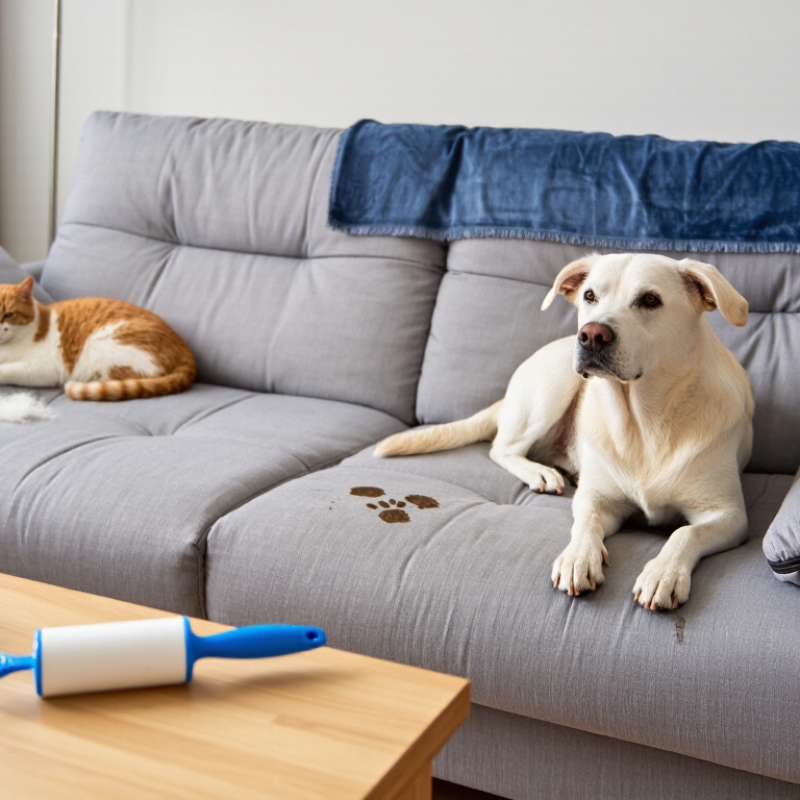
What Is the Best Fabric for Pet Friendly Sofas?

Understanding the Needs of Pet Friendly Sofa Fabrics

Choosing fabric for a pet-friendly sofa starts with understanding how your home really functions.

Dogs bring damp paws, loose hair, and occasional muddy surprises. Cats add claws, fur, and sharp curiosity. A fabric that feels luxurious may perform poorly under daily pressure.

In my experience, tightly woven polyester, performance blends, and treated microfiber are practical choices. Their surfaces resist snagging and usually wipe clean before stains settle. Still, no fabric is completely pet-proof.

Think about your animal’s habits, not only the fiber label. A heavy shedder needs a smooth, low-static surface that releases hair easily. A scratcher needs a dense weave without loose loops.

If accidents are possible, choose removable covers and cushion materials that dry quickly. Dark colors can hide marks, but they may show pale fur. Textured fabrics disguise small stains better, yet they can trap hair.

Ask for a sample and test it with a damp cloth, lint roller, and fingernail.

Tips:

Check the cleaning code before buying. Vacuum seams weekly, because hair collects there first. Blot spills; rubbing pushes moisture deeper.

Keep a washable throw on the sofa’s favorite sleeping area. I once assumed tightly woven fabric needed no protection, and repeated wet cleaning dulled its finish.

That was a useful reminder: durability also depends on maintenance. Choose a fabric you can realistically care for, not one that only looks strong in a showroom.

Comparing Common Sofa Materials for Durability and Comfort

Pet-friendly upholstery must balance abrasion, snag resistance, cleanability, and skin comfort. The 2023–2024 APPA National Pet Owners Survey reports that 66% of U.S. households own a pet. That scale makes fabric selection a practical maintenance decision, not a styling detail. In daily use, tightly woven microfiber and solution-dyed polyester usually handle claws and muddy paws better than linen or bouclé. They also feel warmer and softer than leather in winter.

Testing data needs careful interpretation. The Association for Contract Textiles (ACT) uses 30,000 Wyzenbeek double rubs as a high-traffic upholstery benchmark. ACT also warns that abrasion results should not be treated as a complete durability forecast. A sofa can pass abrasion testing and still fail at seams, zippers, or cushion edges. Look for a tight weave, reinforced stitching, and removable, washable covers where possible. Microfiber is often the safest compromise. Its low pile gives claws fewer loops to catch, while its dense surface supports quick spot cleaning. Still, cheap microfiber can pill or flatten.

Leather resists absorbed spills and releases hair with a wipe, but sharp claws may leave permanent marks. Cotton and linen feel breathable, yet their fibers stain and wrinkle more easily. Velvet is comfortable, though its nap can show shading and trapped hair. Not ideal for every home. Comfort also depends on foam density, cushion depth, and heat retention, not fabric alone. A practical test is simple. Rub a damp cloth over a sample. Pull it lightly with a fingernail, then sit for ten minutes. I would choose polyester microfiber for frequent pet use, but inspect construction before trusting any rub-count claim.

Evaluating Stain Resistance, Hair Control, and Easy Cleaning

What Is the Best Fabric for Pet Friendly Sofas?

A pet friendly sofa must handle stains, hair, and repeated cleaning. In real homes, tightly woven microfiber and performance polyester often perform well. Their smooth surfaces leave fewer places for claws and loose fur to hide. Hair tells the truth. Dark fabric may reveal pale fur quickly, while textured fabric can trap it between fibers. A close match between upholstery and your pet’s coat can reduce daily frustration.

Stain resistance does not always mean easy cleaning. Some fabrics repel liquid but hold oily marks from paws and skin. A tightly woven, solution-dyed polyester can offer useful color stability and practical stain control. Test a hidden area first. Blot spills instead of rubbing them deeper. Use mild soap, clean water, and a soft cloth, following the manufacturer’s care instructions. Removable, machine-washable covers can save time, although zippers and seams may shrink or distort.

I have found that the best choice depends on the pet, not just the fabric label. A short-haired cat may create less tangling but more visible surface hair. A large dog may bring mud, moisture, and sharp nails. Leather-like surfaces resist hair well, but scratches can become permanent. Velvet feels comfortable, yet its pile may show marks and collect fur. No material solves every problem. I once underestimated seam cleaning, which became the hardest part. Check the weave, cushion covers, cleaning code, and fabric sample before buying.

Choosing Fabric Based on Your Pet’s Habits and Household Needs

What Is the Best Fabric for Pet Friendly Sofas?

Choosing fabric starts with your pet’s habits, not a trend or color chart. The American Pet Products Association’s 2023–2024 National Pet Owners Survey estimates that 66% of U.S. households own a pet. That scale makes daily wear important. A shedding dog needs a different sofa from a cat that sharpens claws beside the armrest.

For heavy shedding, choose a tightly woven, smooth fabric in a medium tone. Hair is easier to remove, and fewer loops give claws less to catch. Microfiber and tightly woven polyester often handle wiping better than loose bouclé or chenille. For scratching cats, fabric alone is not enough. Place a stable scratching post near the sofa. Even strong upholstery can fail when claws repeatedly target one seam.

Accidents require a practical cleaning plan. Look for removable covers, tested colorfastness, and cleaning instructions that match your routine. The ACT Upholstery Performance Guidelines commonly use 15,000 double rubs for light traffic and 30,000 for heavier use. These figures measure abrasion, not stain resistance or claw damage. That distinction matters. A high-rub fabric may still absorb muddy paw prints quickly. Leather resists loose hair and many spills, but scratches remain visible. In a showroom test, rub a damp white cloth on a hidden area and inspect the seam edges. It is not a perfect test, and I would not treat it as laboratory proof. Still, real homes are messier than fabric samples suggest.

What Is the Best Fabric for Pet Friendly Sofas? - Choosing Fabric Based on Your Pet’s Habits and Household Needs

Fabric Type Best For Resistance to Claw Snags Fur and Hair Visibility Ease of Cleaning Moisture and Odor Considerations Important Notes
Performance Microfiber Homes with active dogs, cats, or frequent spills High; tightly woven surfaces usually offer fewer loose loops Depends on color; medium tones can disguise everyday shedding Very good; many upholstery versions can be spot-cleaned with mild soap and water, subject to the care label Generally absorbs less liquid than many napped fabrics, but spills should still be treated quickly A practical all-round option; check the specific cleaning code because treatments vary
Tight-Weave Polyester Families seeking affordability and everyday durability High when the weave is dense and flat Patterned or mid-tone colors can help conceal loose hair Good; often responds well to vacuuming and spot cleaning Usually dries relatively quickly after careful cleaning, but prolonged dampness can still cause odor Inspect the fabric in person if possible; polyester performance differs by weave and finish
Canvas or Duck Cloth Large dogs, high-traffic rooms, and casual interiors High; sturdy plain weaves are less likely to catch claws than open weaves Light colors show dark hair; darker colors show light hair Good; removable covers are especially useful when available Can hold moisture if heavily saturated, so thorough drying is important May feel firmer and more casual than velvet or chenille; confirm whether covers are machine washable
Tightly Woven Cotton Blend Households wanting a natural-feeling, breathable upholstery option Moderate to high, depending on weave and fiber blend Natural colors and subtle patterns can reduce the appearance of hair Moderate; cotton can absorb stains, so prompt treatment is important More absorbent than many synthetic fabrics and may retain odors if not dried properly Choose a durable blend and review shrinkage and cleaning instructions before purchase
Crypton-Style Performance Upholstery Homes prioritizing stain resistance and frequent entertaining Usually high, provided the surface has a tight construction Available in many colors and patterns; select a shade close to the pet’s coat Very good; many products are engineered to make spills easier to remove Protective finishes can slow liquid penetration, but seams and prolonged moisture still require attention Performance claims vary by product; follow the manufacturer’s approved cleaning method
Velvet Homes with pets that do not regularly scratch or climb on furniture Moderate; the smooth surface has fewer loops, but pressure can leave nap marks Hair may be visible on contrasting colors, although it can often be vacuumed away Moderate; vacuum gently in the direction recommended for the pile Spills can create marks if not blotted promptly; avoid aggressive rubbing Attractive and relatively snag-resistant, but less forgiving of scratching, oily stains, and crushed pile
Chenille Low-shedding pets and households that prioritize softness Low to moderate; raised yarns and loops can catch claws Often hides minor hair better than solid, high-contrast fabrics Moderate to difficult; textured fibers may trap dust and hair Can absorb spills and may be difficult to deodorize fully Use caution with cats that knead or scratch; tightly woven chenille is preferable to loose-loop designs
Leather Households wanting easy surface wiping and minimal hair retention Low against sharp claws; scratches can be permanent Excellent; hair generally does not embed deeply and can be wiped or vacuumed Very good for surface spills when cleaned according to the leather-care instructions Less absorbent than fabric, but seams and unfinished areas still need protection from moisture A strong choice for shedding pets that do not scratch; avoid harsh household cleaners
Linen or Linen Blend Low-traffic rooms and households valuing a relaxed, natural appearance Moderate to low; looser weaves can snag and wrinkle Light shades may show dark fur clearly, while natural variations can disguise small marks Moderate to difficult; stains can set quickly and some linen upholstery is not washable Absorbent and prone to visible water rings if incorrectly cleaned Usually not the first choice for puppies, muddy paws, or pets that frequently lounge on the sofa
Quick Selection Guide: Choose tightly woven microfiber or performance polyester for a balanced everyday option; choose leather for easy hair removal when scratching is unlikely; choose removable, washable covers when accidents and frequent cleaning are major concerns. Always verify the sofa’s specific upholstery fiber, weave, finish, and cleaning code before purchase.

Maintaining a Pet Friendly Sofa for Long Term Use

Maintaining a Pet Friendly Sofa for Long Term Use

A pet friendly sofa needs regular care, even when its fabric resists stains. In my experience, weekly vacuuming prevents hair and grit from working into the weave. Use a soft upholstery attachment around seams, corners, and cushion buttons. These areas often hide more dirt than expected.

Clean small spills immediately with a white, slightly damp cloth. Blot gently. Never scrub, because friction can spread the stain and damage the fibers. Check the care label before using soap or a fabric cleaner. Test any solution behind the sofa first. A mild cleaner may still leave a pale mark on darker upholstery. That happened to me once.

Wash removable covers only as directed, and avoid high heat unless the manufacturer permits it. High temperatures can shrink fabric and distort zippers. Rotate loose cushions every few weeks to reduce uneven wear. A washable throw can protect the seat, but it should not remain damp after cleaning. Keep the room ventilated.

Trim your pet’s nails regularly to reduce snags. Inspect seams each month for loose threads or flattened edges. Repairing a small problem is easier than replacing a whole cover. I once ignored a tiny tear, and daily movement made it much larger. Still, no sofa stays perfect forever. Good maintenance simply slows the damage and keeps the fabric comfortable.

What Is the Best Fabric for Pet-Friendly Sofas?

Lower moisture regain generally means less liquid absorption, while tighter synthetic fibers are often easier to clean and more resistant to everyday pet-related wear.

Polyester and acrylic are practical choices for pet-friendly sofas because they typically absorb less moisture than cotton, nylon, and wool. For long-term use, choose a tightly woven fabric, use removable washable covers where possible, vacuum regularly, and treat spills quickly. Moisture-regain figures are typical fiber values and can vary by fabric construction and finishing.

FAQS

What sofa fabric works best for homes with pets?

Tightly woven microfiber or polyester usually offers a practical balance of comfort and durability. Their smooth surfaces give claws fewer loops to catch. They also handle quick spot cleaning. Cheap fabric may still pill or flatten.

Is leather a good choice for pet owners?

Leather releases loose hair easily and resists many absorbed spills. A damp cloth often removes surface dirt. Sharp claws can leave permanent marks, however. Those scratches may become part of the sofa’s appearance.

Which fabric suits a heavy-shedding pet?

Choose a smooth, tightly woven fabric in a medium tone. Hair shows less than on very dark upholstery. Vacuum the seams, corners, and cushion edges weekly. Small details matter.

What fabric is suitable for a cat that scratches?

No upholstery can fully prevent repeated claw damage. Use dense, low-pile fabric with reinforced seams. Place a stable scratching post beside the sofa. Even strong fabric can fail near one targeted seam.

Do abrasion ratings prove that a sofa will last?

No. Abrasion ratings mainly measure rubbing resistance. They do not fully predict stains, claw damage, weak zippers, or failed seams. Inspect stitching and cushion edges before trusting a high number.

How can I test upholstery before buying a sofa?

Rub a damp white cloth across a hidden fabric area. Check whether color transfers or the surface changes. Pull gently with a fingernail near a seam. Then sit for ten minutes. It is useful, but not laboratory proof.

How should I clean small pet accidents?

Blot spills quickly with a clean, slightly damp cloth. Do not scrub. Scrubbing can spread moisture and damage fibers. Read the care label before using soap. Test cleaners behind the sofa first.

How can I extend a pet-friendly sofa’s useful life?

Vacuum weekly around seams, corners, and buttons. Rotate loose cushions every few weeks. Wash removable covers only as directed. Avoid high heat unless approved. Trim nails regularly and repair tiny tears early. I once ignored one. It became much larger.

Conclusion

Choosing the right upholstery begins with understanding what a pet friendly sofa must withstand, including scratching, shedding, muddy paws, frequent lounging, and accidental spills. The question “what is the best fabric for pet friendly sofas” depends on your pet’s habits and your household routine. Tightly woven fabrics, microfiber, performance textiles, and durable canvas-style materials are often practical because they resist snagging and are easier to vacuum or wipe clean. Comfort, breathability, and appearance should also be considered alongside durability.

Stain resistance and hair control are equally important. Smooth surfaces generally collect less fur, while washable or removable covers can make regular care much simpler. Homes with heavy shedders may benefit from fabrics that release hair easily, whereas households with pets that scratch may need a tougher, closely woven construction. Routine vacuuming, prompt spot cleaning, protective throws, and regular inspection can help preserve the sofa’s appearance and extend its useful life.

Liam

Liam

Liam is a dedicated marketing professional with a profound expertise in the industry, where he excels at highlighting the unique advantages of our core products. With a keen understanding of market trends and consumer needs, Liam frequently updates our company’s professional blog, providing......