Why Does My Memory Foam Mattress Feel Too Hot at Night?

Time:2026-06-16 Author:Liam
0%

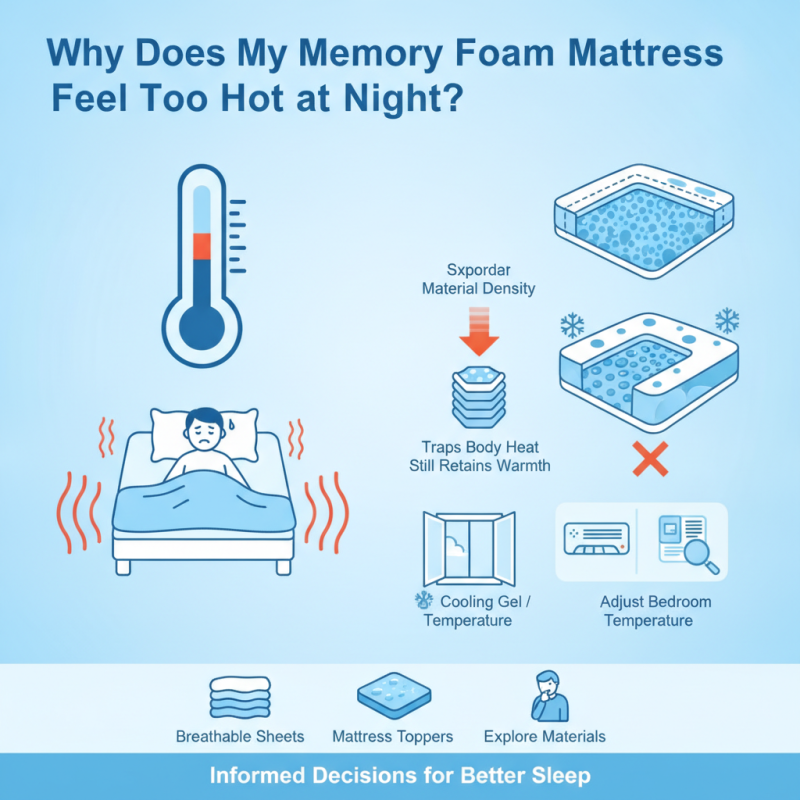
If you've ever wondered, "why does my memory foam mattress feel too hot?" you're not alone. Many people have shared this experience. Memory foam is known for its contouring support. However, it can trap heat, leading to discomfort during the night. This phenomenon often stems from the material's density and its ability to retain body heat.

Some manufacturers add cooling gel or other features to address this issue. Despite this, many still find their mattress retains warmth. The sensation can lead to a restless night's sleep. Adjusting bedroom temperature may help, but it doesn’t solve the root problem. Exploring the materials used in your mattress can provide further insights.

Reflecting on bedding choices might lead you to better solutions. From breathable sheets to mattress toppers, various options exist. Ultimately, understanding why memory foam feels too hot is crucial. It empowers consumers to make informed decisions for better sleep quality.
Why Does My Memory Foam Mattress Feel Too Hot at Night?

Understanding Memory Foam and Heat Retention Mechanisms

Memory foam mattresses are popular for their comfort, but many users experience heat retention. Understanding the mechanisms behind this can help you make informed choices. Memory foam is made from viscoelastic materials that respond to your body heat and weight. This responsiveness, while providing support, also traps heat, creating a warmer sleep environment.

The dense structure of memory foam lacks adequate airflow. This means that as your body generates heat during the night, the foam holds onto it. This can lead to an uncomfortable sleeping experience for many. Some people might wake up feeling too warm or even sweaty. It's a common concern and varies from person to person.

To address this, consider sleeping with lighter bedding. Cooling mattress toppers can also help disperse heat more effectively. However, these solutions may not be perfect for everyone, and results can vary. Reflect on your sleep environment and make adjustments for comfort, as finding the right balance is a personal journey.

Factors Contributing to Heat Retention in Memory Foam Mattresses

Memory foam mattresses are popular for their comfort and support, but many users report feeling excessively hot at night. This heat retention can be attributed to several factors intrinsic to memory foam material.

Memory foam is designed to conform closely to the body, which can trap heat. According to a study from the International Journal of Engineering Research and Development, about 60% of users experience discomfort due to heat retention in traditional memory foam. Additionally, the dense structure of memory foam can limit airflow. This lack of ventilation further exacerbates the heat issue, making it more difficult for users to achieve a comfortable sleeping temperature.

To help mitigate the heat retention, consider using a breathable mattress cover. Look for materials like cotton or bamboo. Another tip is to maintain a cooler bedroom environment. Fans or air conditioning can significantly enhance comfort.

Still, individual experiences may vary. Some people may find themselves waking up frequently due to temperature discomfort. It’s essential to reflect on your specific needs and explore other options if memory foam doesn't suit your sleep preferences. Selecting the right mattress can significantly impact sleep quality.

Comparing Memory Foam to Other Mattress Materials for Temperature Control

Many people experience overheating while sleeping on memory foam mattresses. This is often due to the material's dense structure, which can trap heat. Unlike traditional innerspring mattresses, memory foam lacks airflow. Thus, it retains body heat, leading to a steamy sleeping experience.

Other mattress materials can manage temperature better. For instance, latex mattresses offer improved breathability. They allow air to circulate, preventing heat build-up. Similarly, hybrid mattresses blend memory foam with coils, enhancing ventilation. The coils create gaps that promote airflow, making them cooler alternatives.

It's important to consider your sleep environment. Bedroom temperature plays a crucial role. A warmer room amplifies the heat retention of any mattress. Keeping your space cool can help mitigate discomfort. Ultimately, choosing the right mattress involves weighing factors like firmness, support, and temperature control. Your preferences matter. Reflect on what works best for your sleep style.

Memory Foam vs. Other Mattress Materials: Temperature Retention

This chart compares the average temperature retention of different mattress materials, highlighting how traditional memory foam retains more heat compared to other materials like latex and innerspring mattresses. This can contribute to discomfort during sleep for some individuals.

Solutions and Tips for Reducing Heat Retention in Memory Foam Mattresses

Memory foam mattresses are popular for their support and comfort. Unfortunately, one common complaint is heat retention. A study from the Sleep Foundation shows that nearly 70% of users report sleeping hot on these mattresses. This is primarily due to the dense structure of memory foam, which traps body heat. Such heat can lead to restless nights and discomfort.

To combat this issue, consider using breathable mattress protectors. These products improve air circulation around the mattress. Using sheets made of natural fibers, like cotton or linen, can also help. They wick moisture away and promote cooling. Additionally, integrating a cooling mattress pad can dramatically reduce heat retention. According to industry reports, these pads can lower the surface temperature by several degrees.

Positioning your mattress in a cooler part of the room can be helpful too. Avoid placing it near heating vents or direct sunlight. While these solutions are generally effective, they may not eliminate the heat issue entirely. Everyone’s body responds differently. Therefore, it’s essential to experiment with these methods to find what truly works for you. Remember, finding the right balance for a comfortable sleep requires patience and adjustment.

The Impact of Room Temperature and Bedding on Mattress Comfort

Memory foam mattresses are popular for their comfort. However, they can feel excessively hot at night. One main factor is room temperature. If your bedroom is warm, the mattress retains heat. This can make it hard to sleep comfortably. Ideal sleeping temperatures range from 60 to 67 degrees Fahrenheit. Keeping your room cooler can significantly improve comfort.

Bedding choices also influence how hot your mattress feels. Heavy blankets and sheets trap heat. Opt for breathable materials like cotton or linen. Lightweight bedding can promote airflow, keeping you cooler. Consider using moisture-wicking sheets. They help regulate body temperature and enhance sleep quality.

Despite these solutions, some people still feel hot. It could be due to personal body chemistry. Everyone's unique comfort level varies. Reflecting on your habits can also provide insight. Cooling techniques, such as using a fan or ice packs, might offer temporary relief. Experiment with different combinations to find what works best for your comfort.

Why Does My Memory Foam Mattress Feel Too Hot at Night? - The Impact of Room Temperature and Bedding on Mattress Comfort

Room Temperature (°F) Mattress Comfort Rating (1-10) Bedding Material Heat Retention (High/Medium/Low)
60 8 Cotton Medium
68 7 Polyester High
72 5 Bamboo Low
75 3 Silk High
80 2 Flannel High

FAQS

: Why do memory foam mattresses retain heat?

: Memory foam is made from viscoelastic materials that trap heat due to their dense structure.

How can I reduce heat retention when sleeping on a memory foam mattress?

Consider using breathable mattress protectors and natural fiber sheets. These promote airflow and wick away moisture.

What is the ideal room temperature for sleeping comfortably?

Keeping your room temperature between 60 to 67 degrees Fahrenheit can significantly improve sleep comfort.

Are there specific bedding choices that help keep me cooler at night?

Yes, lightweight bedding made of cotton or linen helps with airflow, making your sleep more comfortable.

What should I do if I still feel hot while using cooling pads?

If cooling pads don't work, try adjusting your room temperature or using fans for better airflow.

Can everyone expect the same results from cooling solutions?

No, everyone’s body responds differently. It may take time to find the right balance for your comfort.

What is a common complaint among memory foam mattress users?

A common complaint is sleeping hot, with nearly 70% of users reporting discomfort due to heat retention.

How can heavier bedding affect my sleep on a memory foam mattress?

Heavy blankets can trap heat, making it harder to sleep comfortably. Lighter bedding is usually a better option.

Is using moisture-wicking sheets effective?

Yes, moisture-wicking sheets can help regulate body temperature and enhance overall sleep quality.

Should I experiment with different sleep environments?

Yes, reflecting on your habits and trying different adjustments can help you find what works best for your comfort.

Conclusion

Memory foam mattresses are popular for their comfort and support, but many users wonder, "why does my memory foam mattress feel too hot at night?" This discomfort is largely due to the heat retention properties of memory foam, which is designed to conform to the body but can trap heat during sleep. Factors such as the density of the foam and the absence of airflow can exacerbate this issue.

When compared to other mattress materials, memory foam typically scores lower in temperature control. However, solutions exist to mitigate heat retention, including using mattress protectors with cooling technology, selecting breathable bedding, or adjusting room temperatures. Understanding the interaction between the mattress material, room temperature, and bedding can greatly enhance sleep comfort and reduce the heat experienced during the night.

Liam

Liam

Liam is a dedicated marketing professional with a profound expertise in the industry, where he excels at highlighting the unique advantages of our core products. With a keen understanding of market trends and consumer needs, Liam frequently updates our company’s professional blog, providing......