Winter care begins with a simple fact: teak is durable, but it is still wood. The USDA Forest Products Laboratory’s Wood Handbook explains that wood exchanges moisture with the surrounding air. That movement can affect outdoor furniture through a damp, freezing season. For owners asking how to maintain teak outdoor furniture over winter, the practical aim is to reduce prolonged moisture, trapped debris, and avoidable surface damage—not to seal the furniture against every change in weather.
A teak chair left beneath wet leaves may develop dark marks where water lingers. A tight plastic cover can also trap condensation. Clean the surface, let it dry fully, and choose a breathable cover or sheltered storage when conditions are severe. Teak’s natural oils help it withstand outdoor exposure, but they do not make joints, cushions, or finishes maintenance-free. Small checks matter.
The USDA handbook is a useful technical reference, not a winter-care schedule for every climate. Local weather, furniture construction, and existing finish all change the best approach. I can’t verify a named industry expert’s exact quotation on this topic from the available source material, so I won’t invent one. That restraint matters: confident-sounding advice is not the same as reliable advice. Before applying oil or cleaner, check the manufacturer’s instructions and test a small, hidden area.
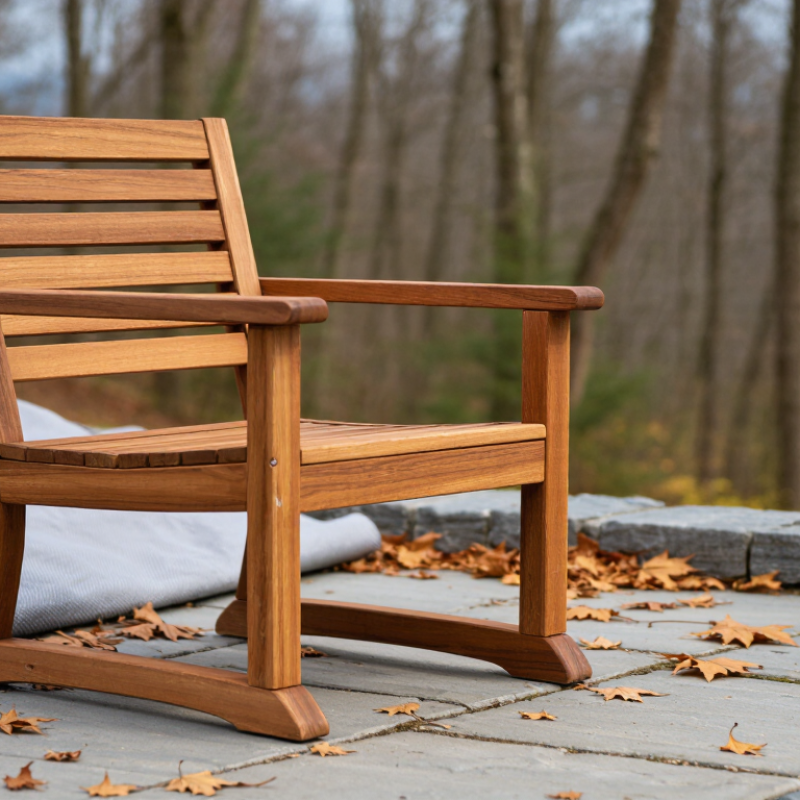
Before winter, inspect teak furniture in daylight, when cracks and discoloration are easier to see. Move each piece slightly and check the underside, feet, and joints. These areas often stay damp longer than exposed surfaces. Look for loose screws, wobbling legs, split boards, and rough edges that could catch water or worsen during freezing weather. A quick check helps. Press gently on the arms and seat; movement can reveal a loose joint that a surface glance misses.
Teak naturally changes color outdoors, so a silver-gray surface alone does not mean the wood is damaged. Check for soft patches, deep cracks, or dark marks that remain after the furniture dries. If you are unsure whether a stain is mildew or ordinary weathering, avoid aggressive sanding until you know more. I have found the underside easy to overlook, and it can change the repair plan. Note any loose hardware, take a few photos, and let the furniture dry before deciding whether it needs cleaning or repair. A damp cushion or trapped leaf may seem minor, but both can leave marks if left in place.
Before winter, brush loose leaves, pollen, and grit from teak furniture with a soft, dry brush. Small grit matters. It can lodge between slats and scrape the surface when cushions or furniture are moved. For stuck dirt, use a soft-bristle brush, clean water, and a little mild soap. Work along the grain, then rinse lightly; avoid forceful spray that can roughen the wood. Check joints, screw recesses, and the undersides of table edges. The underside is easy to miss, even on a careful pass.
Remove damp leaves promptly, since trapped moisture can encourage staining and give decay fungi better conditions. The USDA Forest Products Laboratory’s Wood Handbook (FPL-GTR-282, 2021) notes that fungal decay generally requires wood moisture content around or above 20%. That figure is not a cleaning target, but it explains why debris-filled crevices deserve attention before storage. Let the furniture air-dry fully, including between slats, before applying a breathable winter cover. If grime remains, repeat gentle cleaning rather than reaching for harsh bleach or a pressure washer. Teak’s natural durability helps, but it does not make neglected surfaces immune to winter dirt.
Before covering teak furniture for winter, remove cushions and let every surface dry. Water hides between slats, beneath seat rails, and around metal fasteners. Wipe standing moisture with a clean cloth, then leave the pieces in a sheltered, breezy spot. Keep them out of harsh afternoon sun while drying; rapid surface drying can leave damp areas underneath. Check joints and the undersides by hand. They should feel dry, not cool or clammy. A little patience matters.
The USDA Forest Products Laboratory’s Wood Handbook explains that wood-decay fungi generally need wood moisture content above about 20 percent to grow. That figure is a useful warning, not a guarantee that furniture below it is safe. If available, use a moisture meter on several discreet spots, and follow its instructions for hardwood readings. No meter? Wait through another dry day, especially after rain or washing. I once thought a dry tabletop meant the whole chair was ready; the shaded joints told a different story. Don’t rush it. Only fit a breathable cover once the furniture is thoroughly dry, and avoid sealing in damp air with tight plastic. Research cited: USDA Forest Products Laboratory, Wood Handbook—Wood as an Engineering Material, 2021.
Dry the furniture thoroughly before protection. The timeline below is a practical guide, not a fixed drying time: weather, airflow, and furniture design affect how quickly teak dries.
Tip: After rain or washing, wipe away standing water and allow the furniture to air-dry in a well-ventilated place. Check undersides, joints, and other areas where moisture can linger before covering or storing it.
Choosing between indoor storage and an outdoor cover depends on your winter conditions and available space. A dry, sheltered garage is usually the better option, especially where heavy snow, freezing rain, or strong winds are common. Clean the teak with a soft brush and mild soapy water, then let it dry fully before moving it inside. Leave room around each piece for airflow. A tightly packed, damp corner can encourage mildew. Remove cushions and store them indoors. Even careful owners sometimes put furniture away before it is completely dry; check joints and undersides before storage.
Winter care starts with a close inspection. On a dry day, check each teak surface for hairline cracks, loose joints, and rough patches. Pay special attention to table edges and chair legs, where standing water may linger. Brush away leaves and grit with a soft brush; trapped debris can hold moisture against the wood. If you spot a small crack, note whether it changes over time rather than immediately sanding the whole piece. Teak naturally develops a silver-gray patina outdoors, which is not damage. I once overlooked a damp cushion left on a bench; the wood beneath stayed dark longer than expected.
Tips: Keep furniture slightly raised on stable feet, and leave space around it for airflow. Use a breathable cover, not plastic pressed tightly against the surface. After rain or thaw, lift the cover and let the teak dry fully. Avoid harsh cleaners and aggressive scrubbing, which can roughen the grain. A mild soap solution and a soft cloth are usually enough for routine cleaning. Small details matter.
Check fasteners every few weeks, especially after strong winds or a freeze-thaw cycle. Tighten only what feels loose; overtightening can stress the wood. If the finish looks uneven, test any cleaning or maintenance method on a hidden area first. Winter conditions vary, so inspect again after unusual wet spells. Some marks may remain, and that is not always a problem. Allow the furniture to dry before deciding it needs more treatment.
Check joints, screws, feet, and undersides in daylight. Press the arms and seat gently; wobbling can reveal loose joints. Look for deep cracks, soft patches, and rough edges.
No. Teak naturally turns silver-gray outdoors. Check for soft wood, deep cracks, or dark marks that remain after drying.
Remove cushions and wipe away standing water. Check between slats, beneath rails, and around fasteners. The wood should feel dry, not cool or clammy. Don’t rush it.
A dry, sheltered garage is preferable in snowy, windy, or icy conditions. If space is limited, use a breathable outdoor cover and inspect the furniture regularly.
Tight plastic can trap damp air against the wood. A breathable cover sheds rain and snow while allowing some airflow.
Clean it with a soft brush and mild soapy water, then let it dry fully. Remove cushions and leave space around each piece for airflow.
Raise the legs on stable supports to keep them above pooled water or slush. After storms, brush off heavy snow and check for sagging covers.
Check it every few weeks. Look for damp patches, loose ties, and standing water. I might forget too, so a calendar reminder could help.
Learning how to maintain teak outdoor furniture over winter begins with a careful pre-season assessment. Check each piece for loose joints, cracks, stains, or other signs of wear, then remove leaves, dust, and surface debris with a gentle cleaning. Allow the wood to dry completely before adding any protection, since trapped moisture can contribute to unwanted marks or deterioration during storage.
Choose a winter protection plan that suits your space and climate: move the furniture indoors when practical, or cover it outdoors with a breathable cover while keeping it slightly elevated and well ventilated. Avoid wrapping damp teak too tightly. During winter, inspect the furniture occasionally for moisture buildup, debris, or shifting covers, and address any issues promptly. These simple steps help preserve teak’s natural appearance and prepare the furniture for comfortable use when warmer weather returns.
